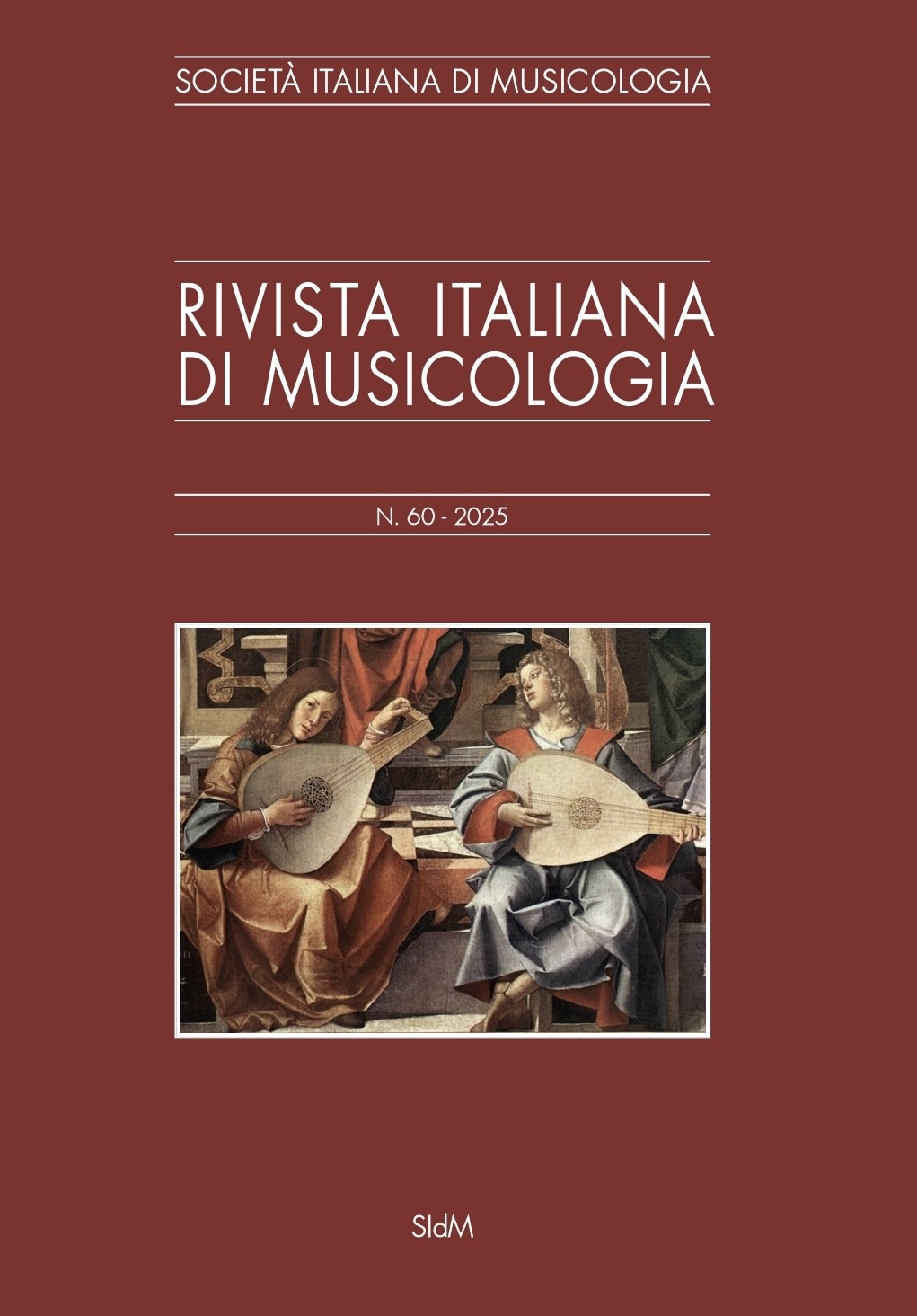
«Judicium aurium superbissimum». Gli strumenti musicali e la loro voce da Crousaz a Diderot
Abstract
This essay examines a group of well-known texts in the history of modern aesthetics, fundamental to the French (and not only) eighteenth-century panorama: the Traité du beau (1715) by Jean-Pierre de Crousaz, the Réflexions critiques sur la poésie et sur la peinture (1719) by Jean-Baptiste Dubos, the Essai sur le beau (1741) by Yves-Marie André and Les beaux arts réduits à un même principe (1746) by Charles Batteux. To these many other writings by Denis Diderot are added, including the Lettre sur le sourds et muets (1751), some articles from the Encyclopédie, and the Leçons de clavecin et principes d’harmonie (1771). The main theme of investigation is the consideration of both the musical instrument itself and its peculiar sonorous expression. Numerous problems of the eighteenth-century thought mindset develop from this point: for example, the status of music as an artistic practice intended for fruition, and its possibility of participating in the traditional imitative paradigm (as a language and a form of representation). More specifically, the theoretical emancipation of the instrumental genre and its relationship with the voice are highlighted, the latter normally considered as one of the most important natural means of human expression: however, the musical instrument, a work of artifice, increasingly acquires dignity in its dialectical relationship with the living body, almost equaling its communicative capacity and thus allowing the legitimation of the ‘instrumental’ voice. Thus, a small fragment of the evolution of French musical thought is so illustrated to provide an overview of one of the many developments of the art-nature binomial, which is also central to the modern aesthetic way of thinking.